Get a Complete Kitchen Equipment Quote
Tell us your restaurant type and seating capacity — we'll build a complete equipment list with pricing
Commercial Cooking Ranges & Stoves
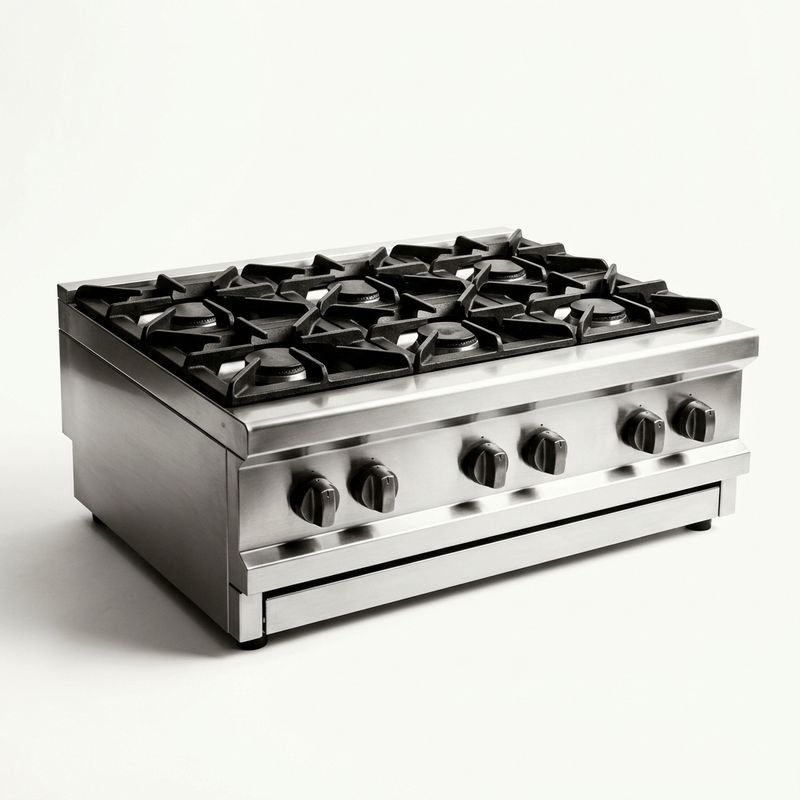
The commercial cooking range is the heart of any restaurant kitchen. Indian restaurant kitchens typically favour gas ranges for their fast heat response and lower operating costs. Ranges come in 2-burner, 4-burner, 6-burner, and larger configurations. For Indian cooking — with its heavy use of high-heat techniques — a powerful, heavy-duty range is essential.
2-Burner Commercial Range
Entry-level commercial range for small restaurants, cloud kitchens, and cafés. Each burner typically 5,000–8,000 kcal/hr.
4-Burner Commercial Range
The most popular range size for Indian restaurants. Accommodates most menu requirements with room to spare.
6-Burner Commercial Range
For restaurants with complex menus or higher volume. Often paired with an oven cavity underneath.
Chinese Range / Wok Burner
High-powered single or double wok burner for Chinese, Thai, and high-heat stir-fry cooking. 15,000–30,000 kcal/hr.
Commercial Deep Fryers
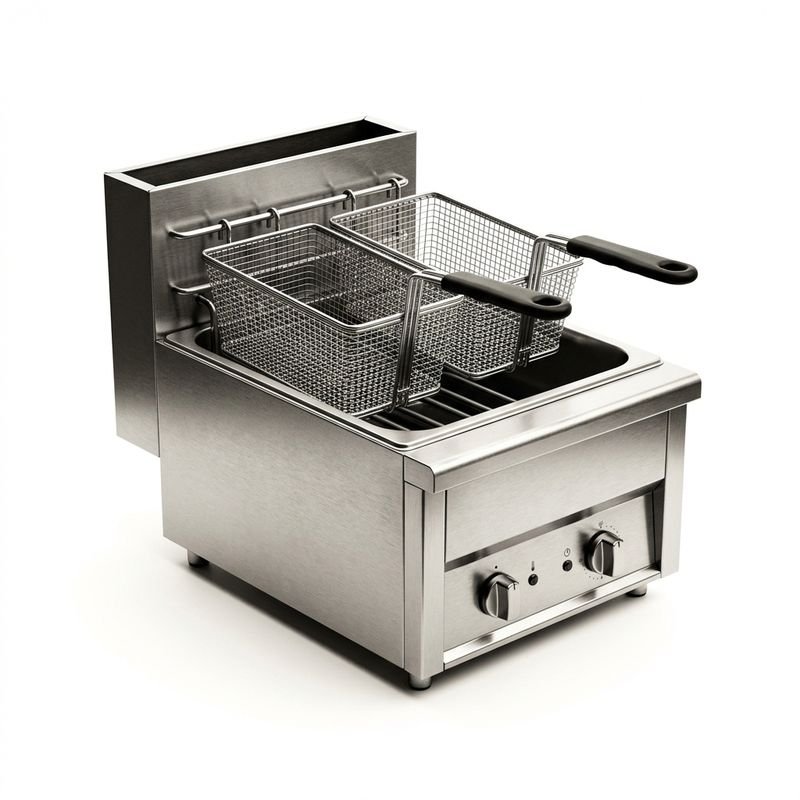
Commercial deep fryers are essential for restaurants serving fried items — from French fries and pakoras to samosas and fried chicken. The key specifications to consider are oil capacity (in litres), heating method (gas or electric), and recovery time (how quickly the oil returns to temperature after a batch).
6–8 Litre Gas Fryer
Compact gas fryer for low-volume frying. Common in small restaurants and snack shops.
15–18 Litre Gas Fryer
Mid-size double-basket fryer. The standard for medium-volume Indian restaurants.
25–30 Litre Gas Fryer
High-capacity fryer for QSRs and restaurants with fried items as menu staples.
Commercial Exhaust Hoods & Ventilation
A commercial kitchen without proper ventilation is dangerous, illegal, and unpleasant to work in. FSSAI guidelines and most municipal regulations in India require commercial kitchens to have adequate exhaust systems. The exhaust hood size is determined by the length of your cooking line and the heat load from your equipment.
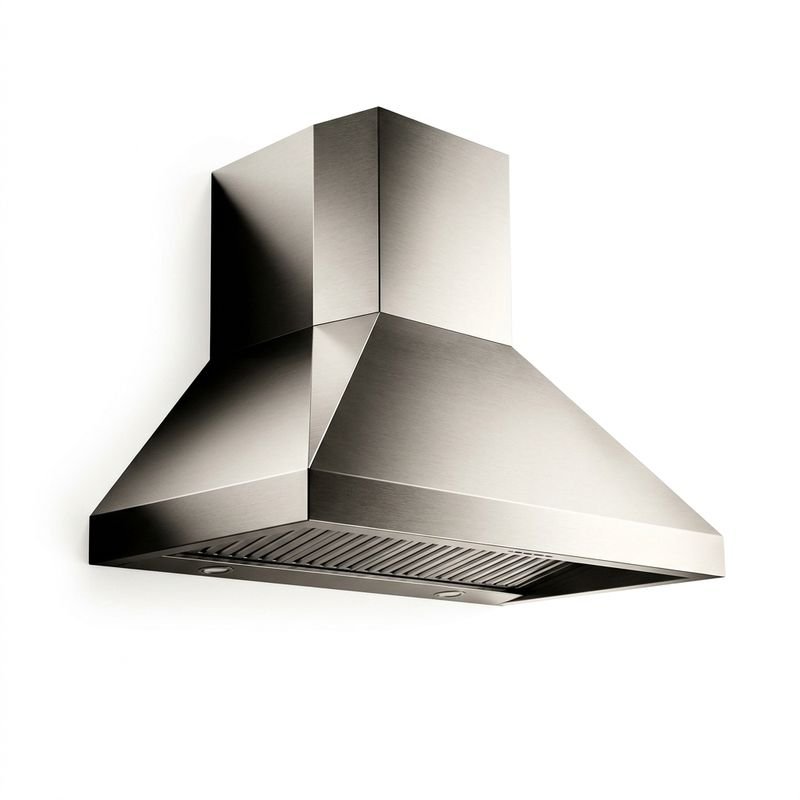
Wall-Mounted Exhaust Hood
Standard wall-mounted exhaust hood for kitchens where the cooking line is against a wall. Most common configuration in Indian restaurants.
Price varies by size (per running metre)
Island Exhaust Hood
Ceiling-mounted island hood for kitchens with cooking equipment in the centre of the room. Used in hotel kitchens and large restaurants.
Make-Up Air System
Supplies fresh air to replace the exhausted air. Required for larger kitchens to maintain air balance and comply with regulations.
Commercial Dishwashers
Manual dishwashing is slow, expensive in labour costs, and inconsistent. A commercial dishwasher pays for itself quickly in a busy restaurant. They use high-temperature washing (85°C+) to sanitise dishes far more effectively than manual washing, meeting FSSAI hygiene standards.
Under-Counter Dishwasher
Compact dishwasher for small restaurants, cafés, and bars. Fits under the counter and handles 25–40 racks per hour.
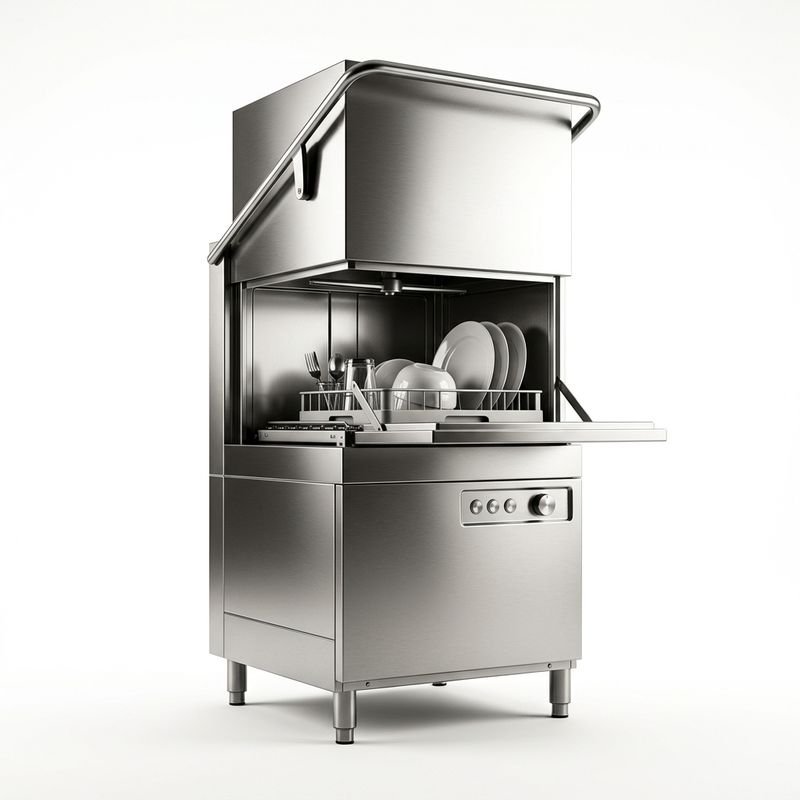
Hood-Type Pass-Through Dishwasher
The workhorse of restaurant dishwashing. A hood lifts to load/unload; handles 60–100 racks per hour.
Conveyor / Tunnel Dishwasher
Industrial-scale dishwashing for hotels, catering, and large restaurants. Continuous operation, 200+ racks per hour.
Other Essential Kitchen Equipment
Commercial Work Tables
Stainless steel prep tables in various sizes. The foundation of any commercial kitchen layout.
Commercial Griddle / Tawa
Large flat-top griddle for rotis, dosas, pancakes, and flat-cooked items. Gas or electric.
Commercial Bain Marie
Hot water bath for keeping cooked food at service temperature. Essential for buffet-style service.
Commercial Tandoor
Clay or stainless steel tandoor for Indian bread and tandoori cooking. Gas or charcoal-fired.
Setting Up a New Restaurant Kitchen?
We'll create a complete equipment list with pricing based on your menu and covers. Free consultation — no obligation.
Related Guides
Restaurant Kitchen Equipment List: A to Z
Complete list of every piece of equipment a restaurant needs.
Restaurant Equipment: Everything You Need
Comprehensive guide to equipping a restaurant from scratch.
Restaurant Setup Cost India 2026
Total cost breakdown for setting up a restaurant in India.